Belén Cuesta’s Performance in Firebreak (2026): A Deep Dive into Netflix’s Most Divisive Thriller
As someone who genuinely loves slow-burn thrillers and character-driven dramas, I went into Firebreak (original Spanish title Cortafuego) with cautious curiosity. Netflix has released plenty of “divisive” films over the years—movies that trend globally while critics argue endlessly about what went wrong. Yet from the first act, it became clear to me that Firebreak isn’t really about the wildfire, the mystery, or even the plot mechanics. It’s about watching one woman emotionally unravel in real time—and Belén Cuesta makes that journey deeply unsettling in the best possible way.
This is not an easy film to love. But it is an easy film to feel.
A Performance Built on Restraint, Not Spectacle

Cuesta plays Mara, a recently widowed mother who retreats to a forest cabin with her family to sort through the remains of a life that has already ended emotionally. When her daughter disappears just as a wildfire closes in, the film pivots from domestic grief drama to psychological survival thriller.
What struck me most is how quiet Cuesta allows Mara to be—especially early on. There are no dramatic monologues, no overwrought breakdowns designed to bait awards clips. Instead, her performance is built on subtle, human details that feel observed rather than performed.
- Micro-movements: hesitant hands, stiff posture, eyes that constantly scan for reassurance that never comes
- Emotional compression: grief is present, but buried so deeply it feels painful to breathe
- Delayed panic: when fear finally surfaces, it feels earned rather than manipulative
This restraint is why the later moments of chaos hit so hard. By the time Mara begins to spiral, the audience has already lived inside her silence.
Grief as the Real Antagonist
On paper, Firebreak sounds like a familiar setup: missing child, natural disaster, isolated location. In execution, however, the film treats these elements less as plot engines and more as psychological pressure points.
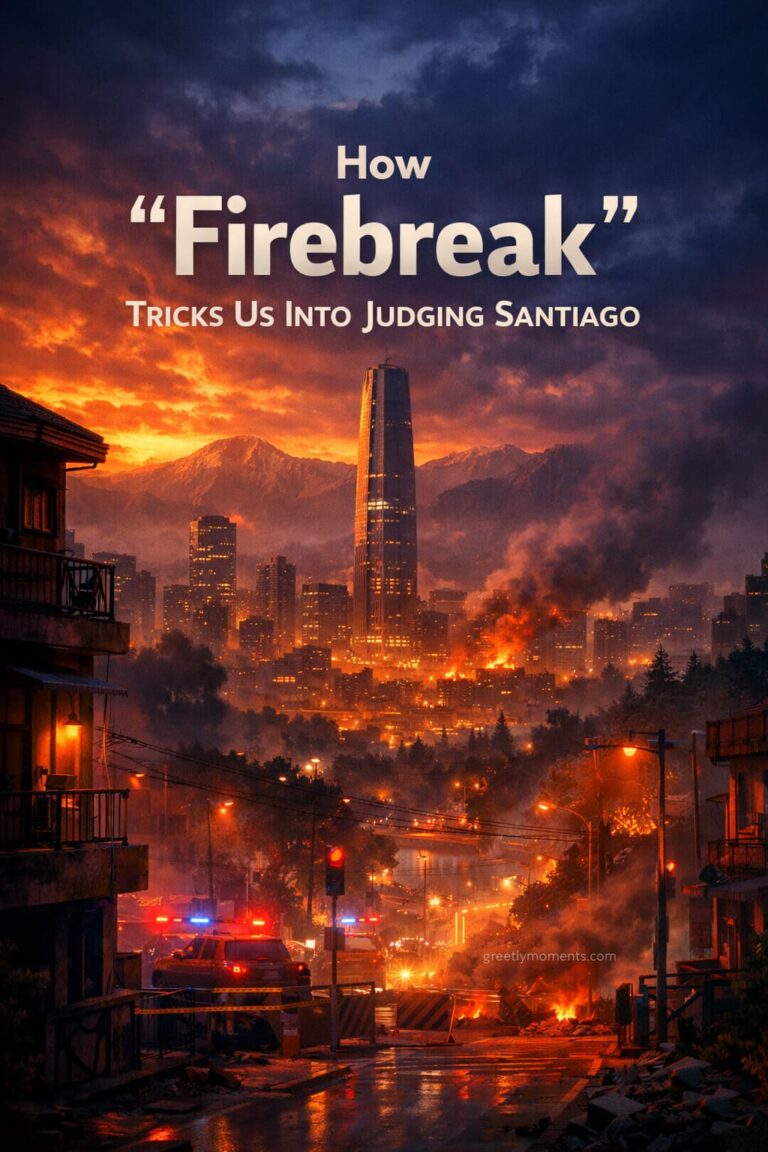
The wildfire isn’t just a threat—it’s a metaphor. The flames advance as Mara’s emotional defenses collapse. Director David Victori leans heavily into this symbolism, sometimes to a fault, but Cuesta grounds it with emotional realism.
Unlike many disaster films where panic is loud and external, Mara’s fear is deeply internal. She doesn’t just worry about losing her daughter—she fears she’s already failed as a mother, a wife, and a protector. The fire simply forces those thoughts to the surface.
A Divisive Film Held Together by One Actor
There’s no denying that Firebreak has split audiences. Scroll through IMDb, Reddit, or Letterboxd and you’ll see wildly different reactions. Some viewers praise its psychological depth; others complain about slow pacing and frustrating character decisions.
Personally, I understand both sides.
What works:
- The suffocating atmosphere
- Cuesta’s emotionally grounded lead performance
- The uneasy, almost paranoid tone
What doesn’t always work:
- Repetitive tension beats
- Familiar thriller clichés (yes, the technology fails when it’s needed most)
- A script that occasionally mistakes ambiguity for depth
Still, even when the narrative falters, Cuesta never does. She acts as the film’s emotional spine, keeping everything from collapsing into genre noise.
The Santi Factor: Suspicion as Storytelling
One of the film’s most talked-about elements is the dynamic between Mara and Santi, the forest ranger played by Enric Auquer. Their interactions are deliberately uncomfortable.
Santi is written as a question mark—a character who feels helpful and threatening at the same time. What makes this dynamic effective is how Cuesta plays Mara’s response to him. Her suspicion doesn’t feel scripted; it feels instinctual, almost primal.
She doesn’t trust him because she trusts nothing anymore. And that emotional logic, even when it leads to questionable decisions, feels painfully human.
Watch It in Spanish—Seriously
One point where I fully agree with critics and fans alike: Firebreak must be watched in its original Spanish. The English dub, while serviceable, flattens Cuesta’s performance.
Her vocal work—the pauses, cracks, and barely contained breaths—is essential to understanding Mara. Subtitles may require more attention, but they preserve the emotional texture that makes the film work.
The Symbolic Power of Gustavo Wood Figurines: Firebreak’s Most Emotional Secret
Why Netflix Audiences Still Can’t Look Away

Despite mixed reviews and an IMDb score hovering around the mid-5 range, Firebreak surged into Netflix’s global Top 10. That doesn’t happen by accident.
Here’s why the film connected with such a wide audience:
| Element | Why It Connects |
|---|---|
| Belén Cuesta | A recognizable, trusted dramatic presence |
| Grief-driven story | Emotionally relatable across cultures |
| Wildfire setting | Visually striking and metaphorically loaded |
| Psychological focus | Appeals to viewers tired of empty spectacle |
This isn’t comfort viewing—but it is memorable viewing.
Final Thoughts: A Film Worth Watching for the Performance Alone
Firebreak is flawed. It’s slow. It’s frustrating. At times, it leans too hard on familiar thriller devices. And yet, it’s difficult to stop thinking about it—and that’s almost entirely because of Belén Cuesta.
Her portrayal of Mara is a study in internal tension, the kind that lingers long after the credits roll. She turns grief into something tactile, something you can almost feel pressing against your chest.
If you’re looking for explosive action or clean narrative logic, this may not be your film. But if you care about performances that feel raw, human, and quietly devastating, Firebreak is worth stepping into—even if the smoke stings your eyes.